- Don's Trading Desk
- Posts
- Why I Closed My 30% Winner Early
Why I Closed My 30% Winner Early
Defense in context

Don Kaufman
December 09, 2025

Today reminded me why trading keeps you humble.
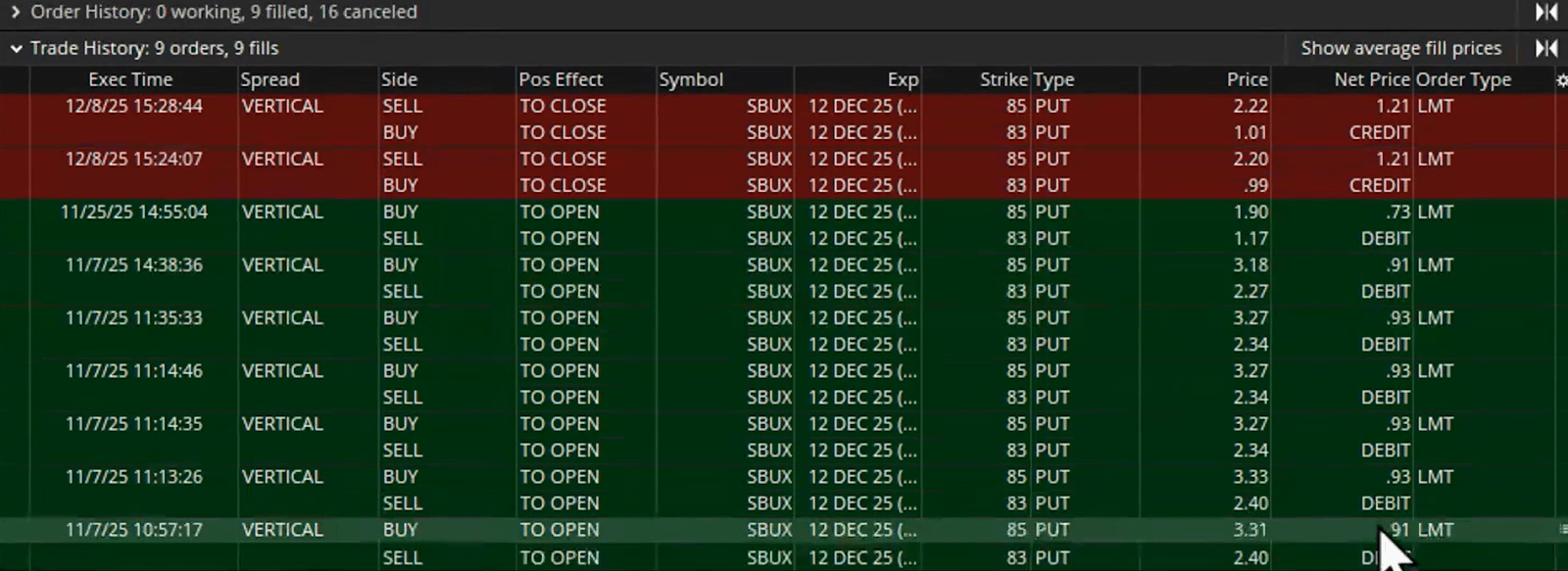
I closed my Starbucks put spread for a 30% gain, and this morning everyone's telling me I'm an idiot.
"You should have waited, Don. Look, it's down another 25 cents. You could have had 55% instead of 30%."
Yeah, well, I didn't. And neither did you.
You want to know what separates amateur traders from professionals?
Amateurs look at trades in isolation. They see one position, one outcome, one missed opportunity. Professionals think portfolio-wide.
When I made that exit decision, I wasn't just looking at Starbucks sitting pretty with 30% gains.
I was looking at Hood down 70%, XHB barely hanging on, and Walmart struggling with only days left before Fed announcements.
That's when you take what the defense gives you.
Most traders obsess over maximizing individual trades.
They see 30% and think, "But what if it goes to 55%?" That's exactly backwards thinking.
The real question isn't "How do I squeeze every penny from this winner?"
It's "How do I survive what's coming next?"
And what was coming next? Fed volatility with a capital V.
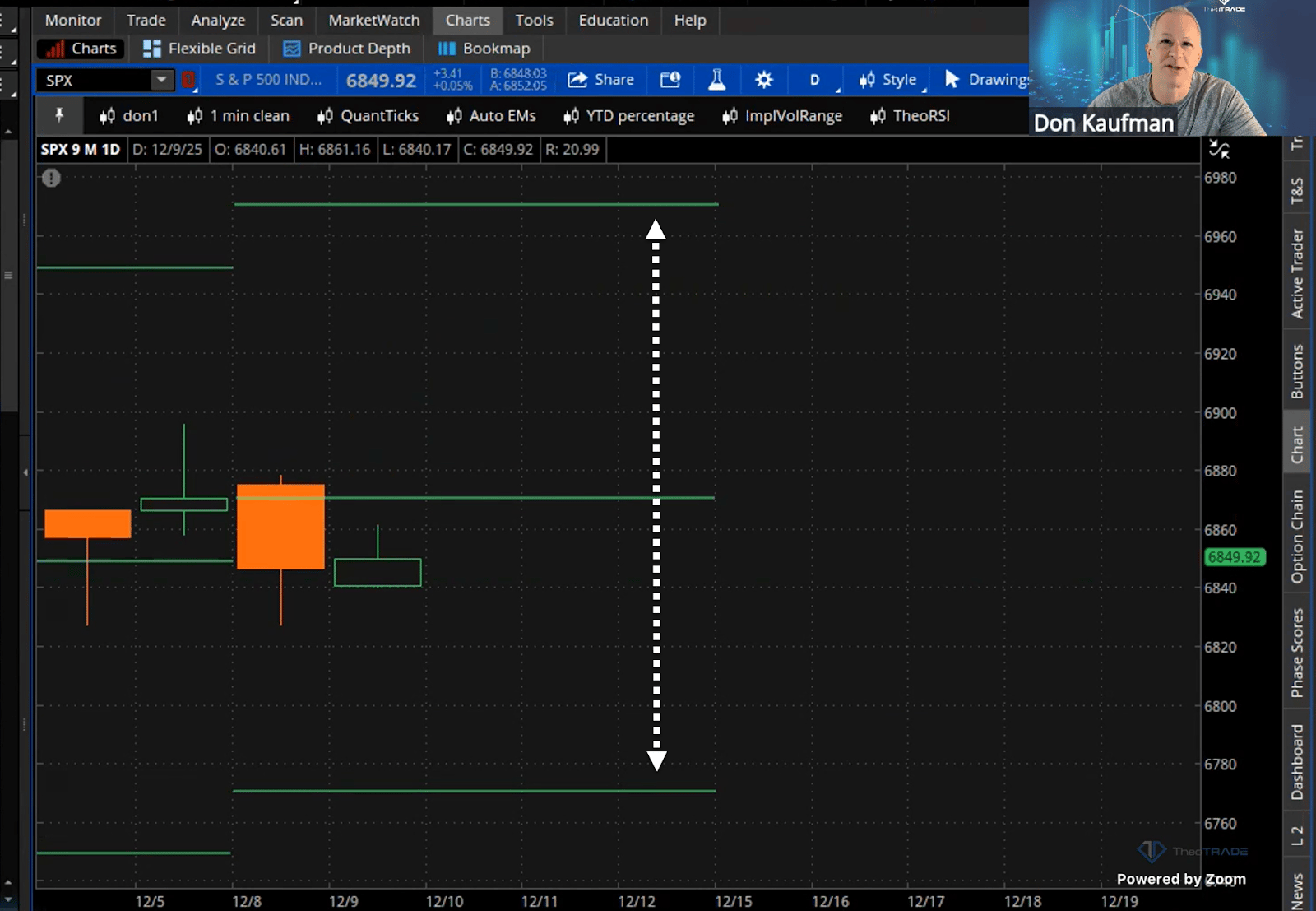
Look at this expected move data.
We started the week with a hundred-dollar expected move on SPX.
Even after Monday and halfway through Tuesday, there's still 92 points of movement priced in for the rest of the week.
You think I want to sit through Fed announcements carrying four positions when the market's pricing in that kind of chaos? Not a chance.
This is where portfolio management beats trade optimization every time.
I had three days left on Starbucks, multiple other positions bleeding, and major volatility events ahead.
The smart play wasn't holding for potentially bigger Starbucks gains – it was banking the winner and reducing overall risk.
Here's proof most traders think wrong about exits: there's still massive open interest on this trade even after it moved further in our favor.
People are still holding, probably thinking about that 55% number instead of managing their total portfolio risk.
I've been doing this long enough to know that Fed announcements turn into gambling sessions real quick.
When you're managing multiple positions and major volatility is coming, you bank the profitable ones and live to fight another day.
Yeah, Starbucks kept dropping today. And yeah, those 1600 contracts still open could theoretically get out at better prices now. But they're also sitting through Fed risk they don't need to take.
I had this position on for 34 days total. Put it on thinking we'd bounce and fade, which eventually happened. But when it finally moved my way with three days to expiration and three other positions struggling, I wasn't about to get cute.
The amateurs calling me an idiot for leaving money on the table miss the bigger picture. Professional trading isn't about maximizing every individual trade – it's about consistent capital preservation while staying positioned for the next opportunity.
Take what the defense gives you, especially when volatility is lurking around the corner. Your portfolio will thank you later.
To your success,
Don Kaufman
Taking 30% while holding three losers into Fed week isn't leaving money on the table. It's portfolio management.
Most traders obsess over individual trades while their whole account bleeds.
Thursday at 1pm, Tony's Matrix Key shows you how to see the whole board — so you know when to bank winners and when to let them ride.